Monday, February 6, 2012

Pfaff 130


This is one of the most popular sail-repair sewing machines you'll find. Small in size but very powerful and with a zig zag stitch. This Pfaff 130 was meticulously cleaned and polished to mint condition.

I even found some gold paste to refurbish the zig zag knob. These sewing machines are very popular, I've seen some for as much as $600 and not as good looking as this one, I might add.

These are truly indestructible so if you find one that doesn't look to trashy get it, they clean-up well and work as strong as an industrial machine, but much smaller.


Please help me to continue writing this blog?
Every little bit helps. Thanks


Pfaff "Dial-A-Stitch" Sewing Machines

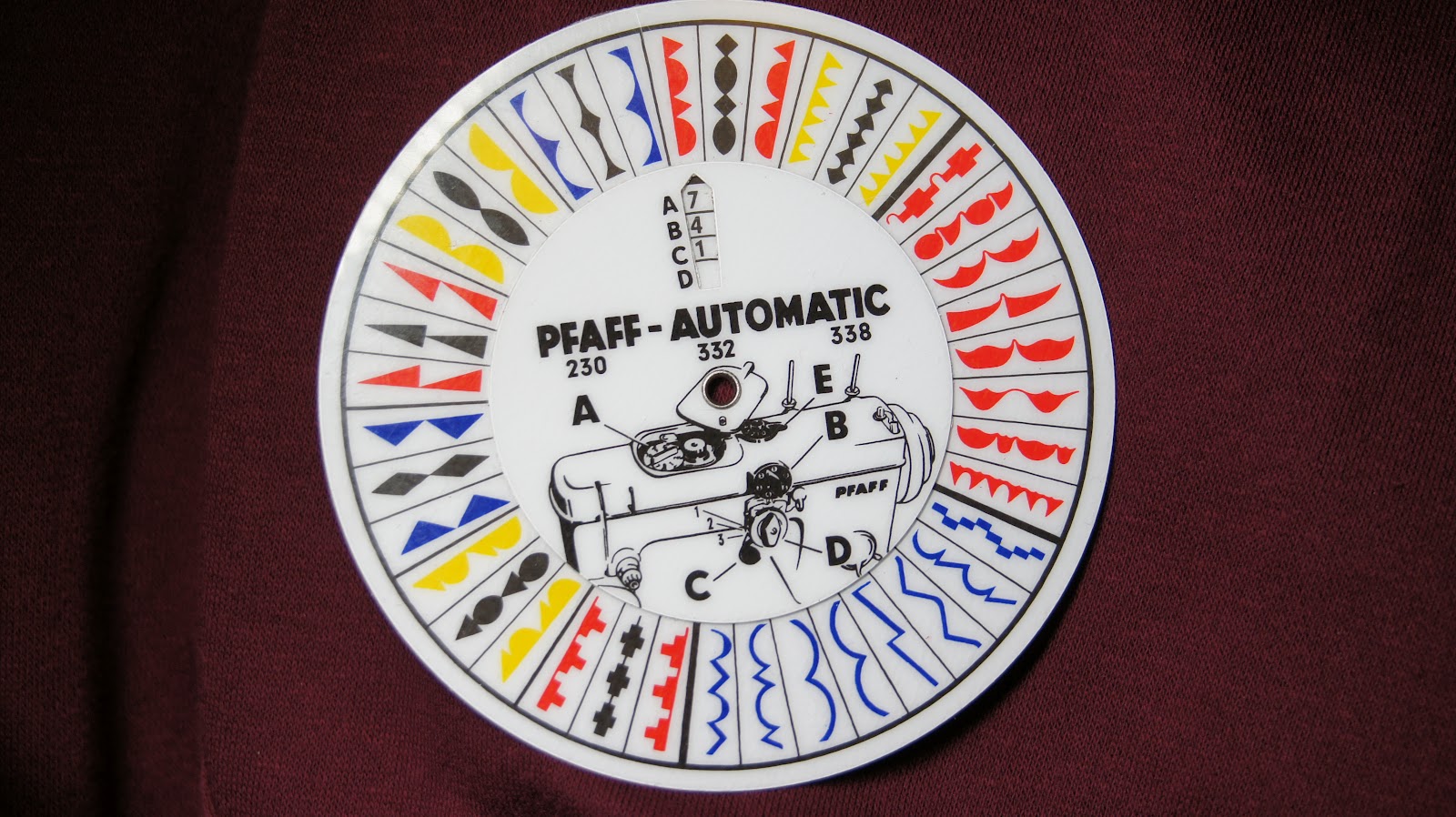
Marvel of design and engineering. The Pfaff 332 is an all metal cylinder bed machine with flat bed attachment and built-in embroidery stitches, as well as straight and zig-zag.


Before the advent of built-in embroidery, sewing machines had multiple cams that would be installed to sew any number of different stitches. Each cam would give you access to a different embroidery stitch.

The Pfaff 332 came with a built-in cam system they called "Dial-A-Stitch" which meant you didn't have to carry any more cams. Just turn the appropriate knob or dial in the right combination and you had access to a multitude of embroidery stitches.


It was quite a complicated set of knob and dial positions. Pfaff devised a wheel computer that would enable the user to pick an embroidery stitch and determine the corresponding dial setting.


These Pfaff 332 and similar sewing machines always remind me of old Navy battleships, tough and unsinkable.

If you run across one of these, the most common issue is a gummed-up cam system. Old oil residue in the cam system needs to be cleaned out carefully so as not to damage the delicate cam mechanism.


Pfaff 230

This video shows a Pfaff 230 a flat bed version of Pfaff's Dial-A-Stitch machine.


Sunday, February 5, 2012

Nina Serrano - Kitchen 1940s

My dear friend Nina Serrano read my Blog a couple of weeks ago and sent me this beautiful original drawing she created from her childhood memories:

I asked Nina to write a couple of words to describe the drawing:


This pen/ink and wash drawing was created in 1980 to illustrate two poems I'd written about my childhood memories in the early 1940's in New York City. 


As a child I often visited the crowded apartment  of Haydee and Orencio  Miras and their children with my uncle. There was always a big pot of food on the stove in the kitchen, near the sewing machine where Haydee's elderly mother stitched. 


In the living room adults played guitars and sang, while we kids played among the piles of coats on the bed in the bedroom. The sewing machine was the hearth and heart of that wonderful home.  
Nina's book of poems is available as an ebook on amazon.com


Friday, February 3, 2012

Thread Sizes Explained

A few readers had asked me about thread sizes and the appropriate needle to use. I found this information on the web and post it here for your info.


Size 33 is a lightweight thread typically used for sewing garments. It is stronger than comparable polyester and cotton threads. Stitching, with a size 12 or 14 needle, is unobtrusive.
Size 46 is a lightweight thread typically used for sewing leather, lightweight upholstery fabric and drapes, canvass, and vinyl. It is sometimes used for sewing heavy duty garments because it is twice as strong as comparable spun polyester and cotton threads. Stitching, with a size 14 or 16 needle, is not highly visible.
Size 69 is a light-middleweight thread typically used for sewing leather, lightweight upholstery fabric, canvass, vinyl, awnings, banners, flags, patio furniture, sails and tents. Stitching, with a size 16 or 18 needle, is noticeable.  **It is the largest size that most home sewing machines can handle.
Size 92 is a middleweight thread used for sewing leather, heavy upholstery fabric, drapes, canvass, auto interiors, awnings, boat covers, banners, flags, patio furniture, sails and tents. Use a size 18 or 20 needle.**This size thread normally requires a commercial sewing machine.
Size 138 is a heavy-middleweight thread typically used for sewing leather, heavy upholstery fabric, drapes, canvass, seatbelts, auto interiors, awnings, boat covers, pool covers, banners, flags, patio furniture, sails and tents. Stitching, with a size 20 or 22 needle, is noticeable. **Requires a commercial sewing machine.
Size 207 is a heavyweight thread typically used for sewing heavy-duty leather, upholstery fabric, canvass, and auto interiors. Stitching, with a size 22 or 24 needle, is very visible
Size 277 is a heavyweight thread typically used for sewing heavy-duty leather, upholstery fabric, canvass, and auto interiors. Stitching, with a size 24 or 26 needle, is very visible.
Size 346 is a heavyweight thread typically used for sewing very thick leather, upholstery fabric, canvass, and auto interiors. Stitching, with a size 26 or 28 needle, is very visible and often used as a focal point.
Size 554 is an ultra heavyweight thread typically used for sewing heavy-duty leather, shoe repair, canvass, and auto interiors. Stitching, with a size 30 or 32 needle, is very visible and often becomes a focal point.

Thursday, January 26, 2012

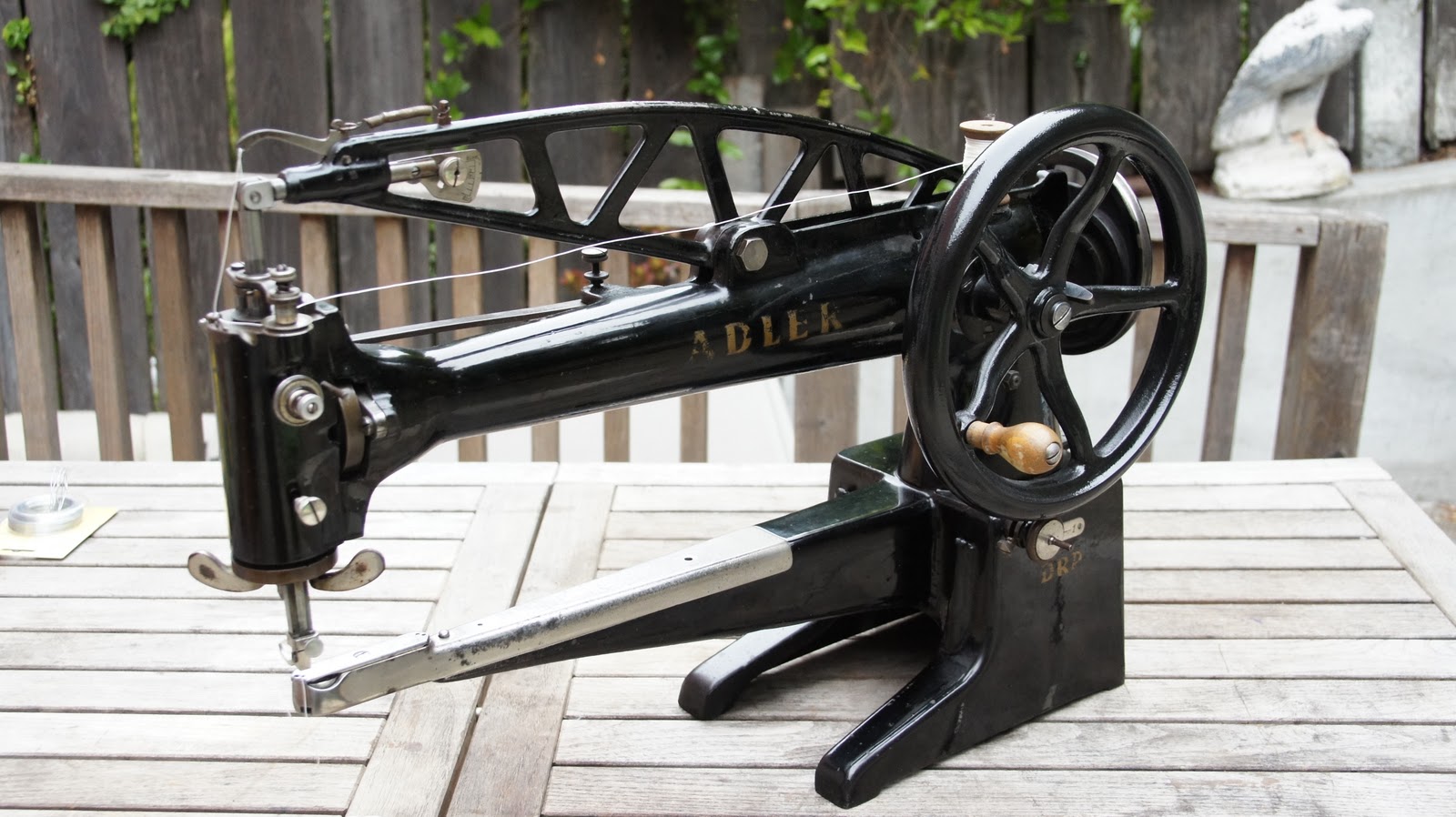
Adler 30-70 Leather Patcher

For those who are interested; the video below also shows you how to thread the machine properly.

I love these cobbler machines. This Adler 30-70 is the last model made by Dürkopp Adler in Germany. Other manufacturers make patchers based on the older Singer 29 cobbler machine.

Below is a Singer 29K I restored with a great local artist -
Amanda Lynn. This cobbler machine now belongs to the Goorin Bros. Hat Company in San Francisco.

These machines have been made for over a hundred years with very little change. Like someone once said "...if it's not broken, don't fix it." (see my other blog post on the Adler 30-1)

This video shows how to thread an Adler 30-70 - this will work for cobbler machines that are based on the Singer 29 and similar sewing machines.

Thursday, November 3, 2011

Singer 111W155

Singer's often copied, walking foot sewing machine. Every industrial sewing machine manufacturer has made a version of this machine. They all have that unusual bump you see on the neck.

When I purchased this Singer 111W155 it was all out of timing and needed some serious cleaning. You can tell by the lost paint that this machine had been used through the years.

These are indestructible sewing machines. Connect it to a motor and it will sew through a steel wall - OK, maybe not steel. Leather, on the other hand, is easily conquered.

I went through and adjusted this one according to the factory specs, and replaced the bobbin case with a new one. She now runs smooth. No excessive play or wear.

Newer machines have reverse but their prices are quite a bit higher. I've been told by an old-time user of upholstery sewing machines that reverse is overrated. I suppose the convenience of not having to flip the material around to backstitch is worth something.


Wednesday, November 2, 2011

Singer 107W1

It's a vintage industrial Singer 107W1 zig zag sewing machine. It sews fantastic stitches and wide zigs and zags. It also came with a cool vintage wooden table and an unusually controllable clutch motor.

This baby had been sitting for years in a warehouse collecting dust. The safety clutch on the roller unit was gummed-up and it was preventing the roller from working properly. I am amazed this Singer was still working in spite of her age. I was able to free all the gummed-up parts and she came back to life with a vengeance.

This machine produces one of the best looking straight stitches I've seen, and one of the largest zig zags. I put her up on craigslist and soon she was sold to a local clothing designer. I'm so happy this machine is now owned by a wonderful young artist here in San Francisco.

Again - I love it when nice people get my machines - I'm confident this machine went to the right person - she knows what she got and will make great use of it. She'll probably pass this Singer 107W1 on to her grandchildren many years from now. After all, this is her first industrial.


Pfaff 145

This is a refurbished Pfaff 145 H3 walking foot machine. This Pfaff was repainted before I got it, but it was in need of extensive mechanical work.

The timing was 90 or more degrees off and the hook was worn to a nub. I replaced the hook assembly, and adjusted the timing and all parameters to factory specs.


The Pfaff 145 H3 is a very popular upholstery machine. You won't find anything better than a properly adjusted mechanically sound Pfaff 145.

The newer Pfaff 545 has a bigger bobbin and the current model 1245 is basically the same mechanically.

If you find one make sure it has been gone-over and checked for wear and excessive play, and make sure the hook is still good and timed correctly.

The Pfaff 145 won't let you down, it will sew through numerous layers of leather as well as vinyl or just about anything you through at it.

This wonderful Pfaff 145 now works on any number of items made by Jack Knife Outfitters.

BTW - I got the servo motor for this machine from Nick-O-Sew. NKS-5500.


Please help me to continue writing this blog?
Every little bit helps. Thanks


Tuesday, November 1, 2011

Adler 30-1

A cobbler's machine. Anyone remember what a cobbler is? Have you ever had your shoes repaired? Don't people just buy new shoes when their old ones die?

This beautiful machine was built in the mid thirties in Germany. Adler is the German word for eagle; and this machine is as beautiful as the bird of prey.

Having the long cylinder arm allows the user access into the deepest part of a riding boot. The foot also rotates to allow repairs where most sewing machine dare not go - actually places they cannot go.

Also check out my post on the Adler 30-70 for sale on eBay, I might add:

http://www.ebay.com/itm/140689160961


Necchi BU Mira

Necchi is a renowned Italian sewing machine manufacturer.  These are prized by many, and considered by owners the best sewing machines ever made - sorry, I wouldn't go that far.

These Italian masterpieces are very tough though, and I love modifying BU Mira's with double pulleys and selling them to Sailors. This is my third modification, I'm working on two more that should be up for sale soon.

This particular one is on its way to Mexico on a sailboat. The new owner had his sailing friend buy it from me and sail it down to Mexico for him to have on his sailboat.


I guess you never know when you might need to repair your sails.  If you're in the middle of the Pacific Ocean and your sail rips wouldn't you want to have your own Necchi Bu Mira hidden away below decks.

Singer 31K15

This is one of my favorite vintage Singer industrials. I enjoy setting these up with roller foot, needle plate and feed dog kit. This is my second 31K modification.

The roller foot allows you to twist and turn in crazy ways.  If you know what your doing you can make beautiful designs with rolling stitches.

This one is unusually shiny and beautiful. I'm sure she was taken care of by her previous owners.

Don't forget to view the video below.


Please help me to continue writing this blog?
Every little bit helps. Thanks


Stradivaro

This Stradivaro sewing machine marks the beginning of Japanese domination of post WWII  manufacturing.


Built-in fancy stitches, forward and reverse. Singer couldn't keep up with cheap Japanese mass-production.

I haven't been able to find much information on this beauty, in fact, I've only seen one other Strad selling on eBay since I purchased this one over a year ago.

I've ben told they were made by Toyota, although this one has no markings to indicate this is true. Toyota did manufacture sewing machines that sold well in the US.

Remember the old 1960s Toyota Corollas? Didn't they look like big sewing machines? They were as cheap as a sewing machine though, and small as a sewing machine.

Actually this two-tone machine reminds me of the American cars of days gone by. The "futuristic" control knobs and the pearl and metallic paint, all reminiscent of the opulence of big gas-guzzling American automobiles of the 50s.

Japanese brand and model names of the time were supposed to sound non-Japanese.  Stradivaro - what is it? Italian? Definitely not Japanese.

Monday, October 31, 2011

Adler 87

You are looking at a rare, powerful, reliable Adler 87. It will easily sew through any type of fabric, straight stitch, zig-zag, and reverse. With the appropriate needle and thread combination your fabric choices are infinite.

Needles for this machine have been obsolete for years and are no longer made (System 1932) After extensive research I have found replacement needles that come in most sizes. (16x257, 1738, DBxF2) These needles have brought renewed life to this sturdy vintage machine.

This machine has been refurbished. I have sewn very sturdy material with it. Small, but heavy. This Adler 87 is very similar in size and function to a Pfaff 130, but rarer.

German engineering at it's best. This machine doesn't quit.  This is another wonderful vintage machine for which there isn't much info on the internet. It took me a long time searching and asking other collectors to finally find a replacement needle system for this one. I hope someone reading this will benefit from this info.

Pfaff 138

This is a Pfaff 138 I sold here in San Francisco. 


What a wonderful machine, it zig-zags and has reverse. Smooth and reliable - if you can find one in good shape don't hesitate to get it. Prices can range between $300-$700 for just the head. 


It is not as tough as a walking foot machine, but it will perform better than a household model like the classic Pfaff 130. Less suited for upholstery, but great for sewing clothing. These are also prized by sailmakers.

This was stored for years in a warehouse gathering dust, rust and guming-up from old dried-up oil residue. It took some love and elbow grease to bring it back from disrepair.


She now works flawlessly and serves a young student who has already demonstrated great talent and creativity.

I love it when my machines go to artists that appreciate them. 


See this machine in action in the video below.